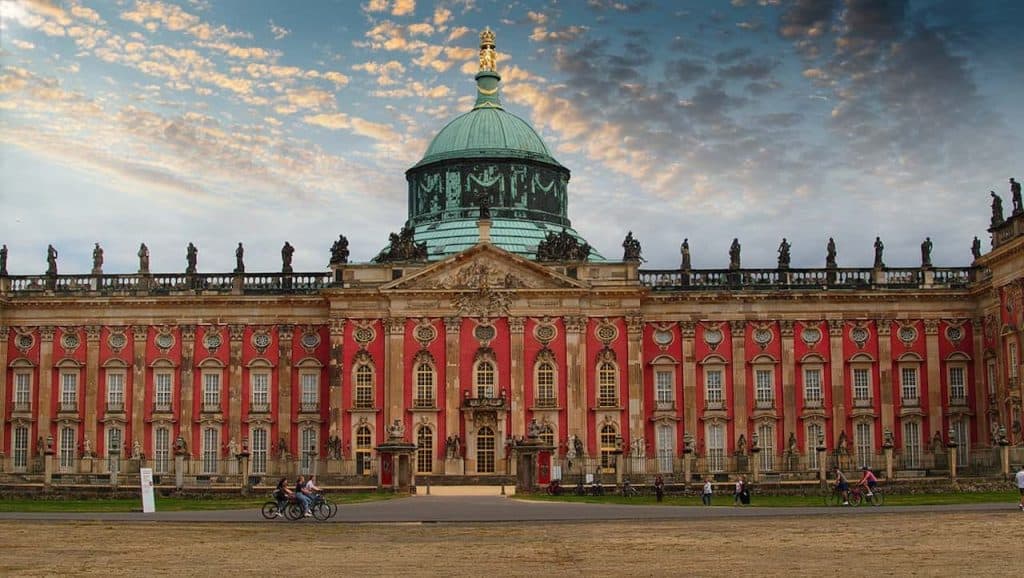
The outskirts of Berlin deserve special attention for vacationers in the German capital. It is common to take a few days to get to know the city, and then travel by car through the neighboring states and regions. In the nearby cities you can find ancient architecture and cozy atmosphere, majestic castles, picturesque areas and colorful attractions.
What to see near Berlin
Departing from the German capital, you can explore nature reserves, palace and park complexes, and memorable historical sites. Choose a destination depending on your interests.
Potsdam
The most famous place around Berlin is Potsdam, the capital of the state of Brandenburg. You can get here in just 30-40 minutes by car or rail. Potsdam is best known for its palaces and parks, which have been designated a World Heritage Site by the UNESCO. Local “Versailles” is the residence of the Prussian kings – the palace and park complex Sans-Souci, which has become the visiting card of the city. It was built in the middle of the 18th century and was rebuilt after the devastation of World War II. The highlight of the park are vine terraces. The complex includes many buildings – the New Palace, Gallery, New Chambers, pavilions, gardens, Roman baths, etc. In the New Garden are located: the site of the Potsdam Conference – Cecilienhof Palace, and the Marble Palace. If interested, see here how to remove rust from rotor.
In Potsdam you can also see the Dutch Quarter, the Russian colony Alexandrovka with its timbered houses, the Old and New Market Square, the preserved city gates, and the recently opened Barberini Museum with Impressionist paintings and modern art.
Castles and fortresses
To see atmospheric castles, you can travel by car to Berlin’s neighbors. For example Schwerin Castle, 200 kilometers from Berlin, picturesquely located on Palace Island between two lakes in the city of Schwerin. It was formerly the residence of the local dukes, and is now the seat of Parliament of Mecklenburg-Western Pomerania. There is also a museum in the castle.
In Moritzburg the baroque castle is surrounded by a lake with forests. It was built by order of the Elector of Saxony as a manor for court hunting.
The castle near Königstein is situated on a rock, the references to which go back to the XIII century. It has preserved the deepest well in Saxony.
If you do not want to travel far, you can visit the beautiful palaces and castles located not in the center, but in different parts of Berlin:
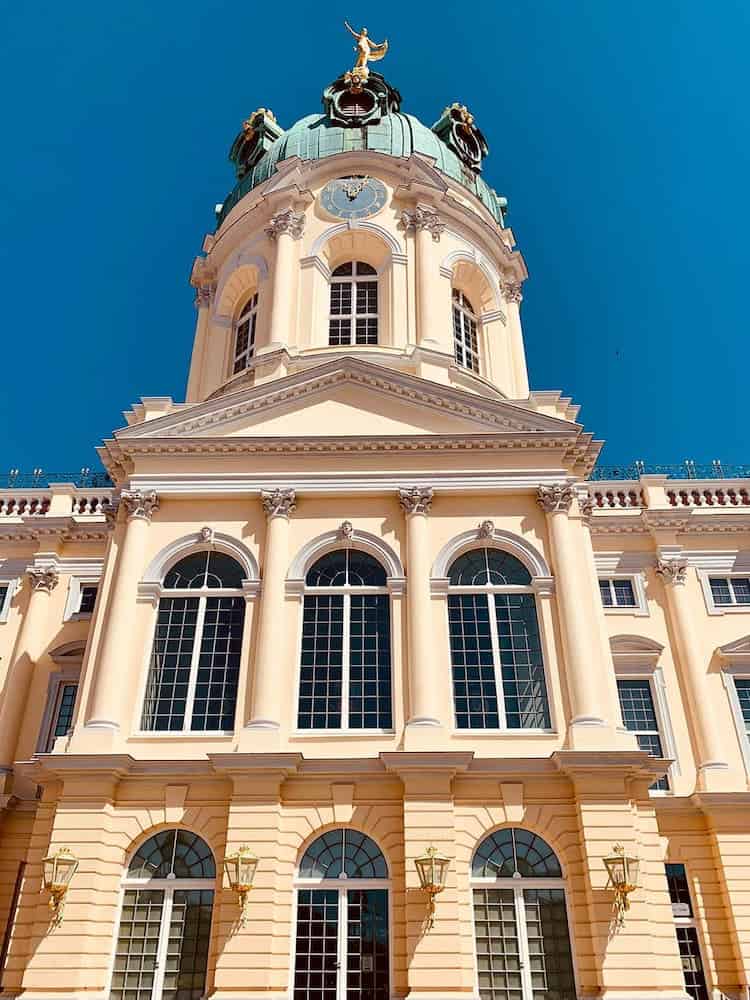
Charlottenburg, a large palace complex owned by the Electors, Prussian kings and emperors of Germany. The palace is an example of exquisite Baroque architecture.
Pfaueninsel on Peacock Island, built for the mistress of King Friedrich Wilhelm II (you can get to the island by ferry).
Schönhausen is a baroque palace with a park in Pankow. For a long time it was a summer residence of “unloved” wife of Friedrich II, Elisabeth-Christine of Braunschweig, and during the GDR Mikhail Gorbachev was a guest here.
Köpenick is a palace on an island on the River Dame with a peaceful park. In ancient times there was a Slavic fortress, then – the palace of the Electors. Nowadays in the palace there is a branch of the museum of arts and crafts.
Bisdorf is a 19th century palace with a pink facade reminiscent of an Italian villa. Now you can visit the cultural and art center and the park.
Tegel is known as the manor house of the great Humboldt family, and there is a family crypt in the palace park. The palace is home to descendants of the famous family, and there is also a museum, which you can visit with a guided tour.
Well-preserved Citadel Spandau in the same district of Berlin. This is a fortress with 4 bastions and a round tower, dating back to the Renaissance. It appeared on the site of a medieval fortress, and now there is a museum in it.
Sachsenhausen Concentration Camp
A concentration camp near Berlin, 40 km away, is Sachsenhausen in Oranienburg. It was established back in 1936, and there is now a memorial and museum here. Between 1936 and 1945, more than 200,000 people were sent to the camp. These were those whom the Nazi regime had declared racially or biologically “inferior”, professional criminals, asocial individuals and those of non-traditional orientation. After the outbreak of World War II, prisoners from the occupied territories began to be sent to the people of Germany held there.
Tens of thousands died of starvation, disease, harsh treatment, medical experiments, and forced hard labor. Sachsenhausen had a gas chamber and an extermination plant with a crematorium. Soviet and Polish troops reached the concentration camp on April 22, 1945, the day before a death march began, during which thousands of prisoners died. You can learn more about the history of the camp in the exhibits posted there. The guard towers, barracks and other buildings have been preserved. Entrance to the former concentration camp is free, you can buy an audio guide or a guided tour.
Tales, routes, and travel tips
What to see on the outskirts of Berlin? Each tourist answers this question in his own way. Usually a trip to Germany is not limited to a tour of the capital, but includes visits to several major cities. Among the most popular destinations are Potsdam, Dresden, Hamburg, the former concentration camp in Oranienburg, Spreewald. Each destination is fascinating in its own way, you can see beautiful palaces, peaceful nature, medieval castles, etc. According to travelers, the country has a well-developed transport network, railroads, it is convenient to travel and by car. Read travelers’ stories to choose your itinerary.

